From Wind Dance to the Roar of the Machine: Where is the Fashion We Wear Actually Born?
There is a romantic, almost hypnotic illusion that takes place entirely around the drafting table. Every year, young men and women flock in droves to the world's leading universities and design schools. They carry with them portfolios filled with dreams, confident that there, within the walls of academia and among the fabric cutters, the collection that will change the face of fashion history will sprout.
But the fascinating truth is that the textile world is perhaps the only arena in the world where a head-on, daily, and necessary collision occurs between the world of spirit and art, and the world of engineering and metal. This is a collision without which we would receive, at best, a boring and graceless garment, and at worst – a spectacular work of art that is simply impossible to wear.
To sort things out, and understand how the perfect garment is created, we must separate two parallel universes that maintain a love-hate relationship with each other, and together compose the heartbeat of the industry.
The First Universe: Kinetic Poetry and Illusions on the Runway
The first universe belongs to the Fashion Designer and the Art Director. These are the people of spirit, art, and silhouettes. The designer lives in a world of burning emotion, where the raw material must be completely subservient to their internal vision. They might demand from the studio distance: "I need a fabric here that stretches exactly at this angle, which falls softly on the shoulder but includes holes in completely asymmetrical positions.".
And sometimes, just to create the one-time, mind-blowing "show" on the runway – they will break all the rules and create pieces of fashion from soft plastic, cold metal strips, or liquid silicone. These are items intended to be photographed, to amaze the audience, and to stop the breath for one evening, not really to be worn in the real life of the following day.

To be a great designer, someone who creates a fantasy of haute couture, doesn't always require a square four-year academic degree. This talent, the deep intuition for body movement and color, often grows best out of a free and stormy studio environment, from practical field studies, and from an apprenticeship with veteran masters – far from the rigidity of the scientific establishment.
The Second Universe: The Physics Behind the Fantasy
But here, right at the point where fantasy meets the wall of reality – the real academy begins. The fashion world, at the end of the day, is not a solo performance by the designer, but a complex and brilliant mosaic of minds.
The second universe belongs to the people of the labs and the production floor. It belongs to the Material Scientist, who examines the properties of the individual fiber under a microscope; to the Textile Engineer and the Production Technologist, who take the wild artistic vision of the designer and translate it into a language of specific weight, chemistry, and pure mathematics. Joining them are the Pattern Maker who turns a sketch into a precise structure, and the Colorist who brews the shade at the molecular level.

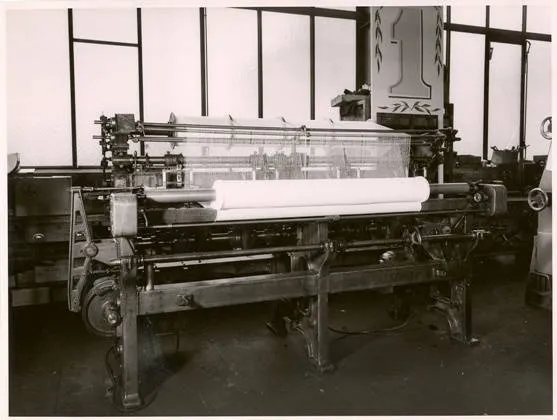
And at the base of the entire pyramid, those who hold the industry on their shoulders, stand the Automation Engineers and Textile Machinery Developers. Here there is no room for abstract inspiration. Here the laws of physics and mechanics rule. They are the ones who will determine which machinery and weaving technologies are required to turn the designer's 2D sketch into an actual, incredibly precise panel of fabric that can be produced at an industrial scale. Unlike free design, this exact science must be studied in the most leading and rigorous faculties in the world. In their world, a mistake of one millimeter in engineering – and the machine is silent.
The Joint Dance and the Eternal Winner
The real magic, the miracle that produces the luxury clothes and brands we wear and love, happens only at the point of friction between all these titles. The person of spirit and the person of the machine must learn to speak the same language, even if they come from opposite ends of the world and academia.
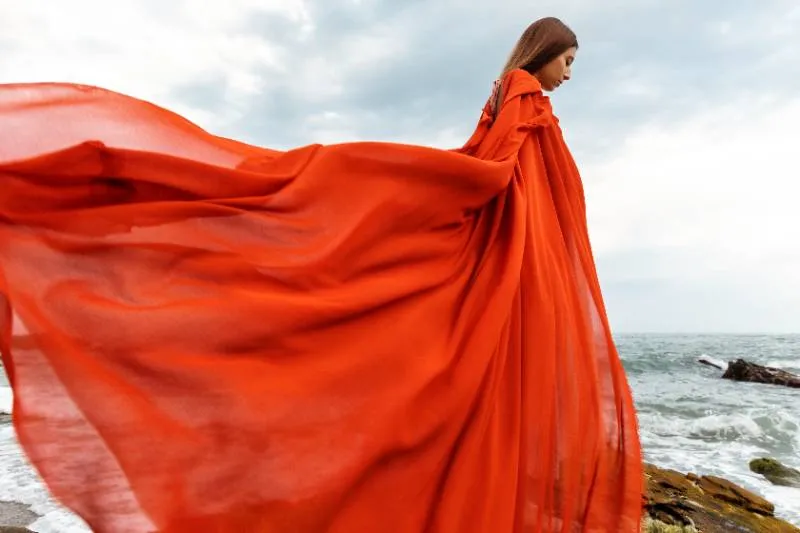
And despite the soft plastic, the avant-garde experiments of the top designers, and the relentless attempts to reinvent the material – at the end of the day, there is one winner, pure and clear: The Fabric.
Thousands of years of human evolution have proven time and again that a combination of threads, woven together into a breathable and soft textile, is the ultimate and most natural choice for the human body. This figure is not about to change.
What do you think?
Must the schools and the entire industry change direction?
Will the designer of the future have to study textile engineering as well so that their designs are feasible and profitable? Or perhaps the entire responsibility lies precisely with the machinery developers and technology companies – who must produce flexible and smart enough machinery that will know how to automatically translate every artistic fantasy into mass production?
Where do you think the real bottleneck of the fashion industry is today – in the dreamy studio of the designer or on the rigorous production floor of the engineer?
Tell us which side of the industry you come from (art or engineering?), and share your professional opinion with us in the comments below. The stage is yours.