Welcome to another fascinating journey behind the scenes of the industry that clothes the world. Let's see again that behind every multi-billion dollar empire, there is ultimately a person who dared to think differently.
In 1975, Amancio Ortega, a Spanish tailor with the ambition of a bulldog and the budget of a neighborhood grocery store, stood against European fashion behemoths who ruled the industry with an iron fist. These giant fashion houses, with luxury dripping from every stitch and marketing waving exorbitant price tags, dictated the tone from top to bottom in rigid half-year cycles, leaving any small player out, breathless.

Ortega was a complete outsider. He started his career as a messenger boy in a local shirt shop, and later sewed padded dressing gowns in his humble home. Without connections in the fashion capitals of Paris and Milan and without a fortune to burn on flashy campaigns, he understood that trying to beat Dior on their turf was like trying to defeat a tank with bicycles. So he decided not to play by their rules, but to simply burn the board and build his own. He developed an obsession with speed that made the entire industry look like a bunch of arthritic turtles. Sound familiar?
The Story of: ZARA.
From Zorba the Greek to Zara: How the Revolution Was Born
Ortega's first store opened in the city of La Coruña, Spain. His original plan was to call it "Zorba" (after the classic film "Zorba the Greek"), but then it turned out that a bar opposite had already taken the name. Ortega, who had already ordered the letters for the sign and wanted to save costs, simply played with the letters he had on hand and created the name ZARA.
It wasn't just a name change, it was the beginning of an entire philosophy of flexibility, improvisation, and maximum efficiency. The story of Zara is an invaluable lesson in entrepreneurship built on audacity and fearlessness of conventions. Instead of dreaming of designs that would be presented in half a year, Ortega built a chain that simply "sucks" the hottest ideas from the runway and the street directly into the store in just two to three weeks.
The Billionaire Who Ate in the Workers' Cafeteria
The true beauty in Zara's story is the psychology of its founder. Unlike haute couture designers who lock themselves away in ivory towers, Ortega refused to have his own private office, even after becoming one of the five richest people in the world. He sat in an open-plan office with the designers, fabric cutters, and procurement staff. Every day, he would go down to the cafeteria to eat lunch with the production workers.
This connection to the ground level gave birth to Zara's iron law: listen to the street. Zara's system is built such that store managers are not just cashiers, but intelligence agents. In one of the company's famous cases, a customer in Tokyo asked for a pink coat. The next day, a customer in New York inquired about a similar coat, as did a customer in Paris. The store managers entered the information into the system. In less than 14 days, over 2,000 branches worldwide were already displaying pink coats for sale – and they sold out within hours. This is "demand-driven" responsiveness in its purest and wildest form.
Time Engineering: JIT in its Extreme Version and Numbers That Leave Others in the Dust
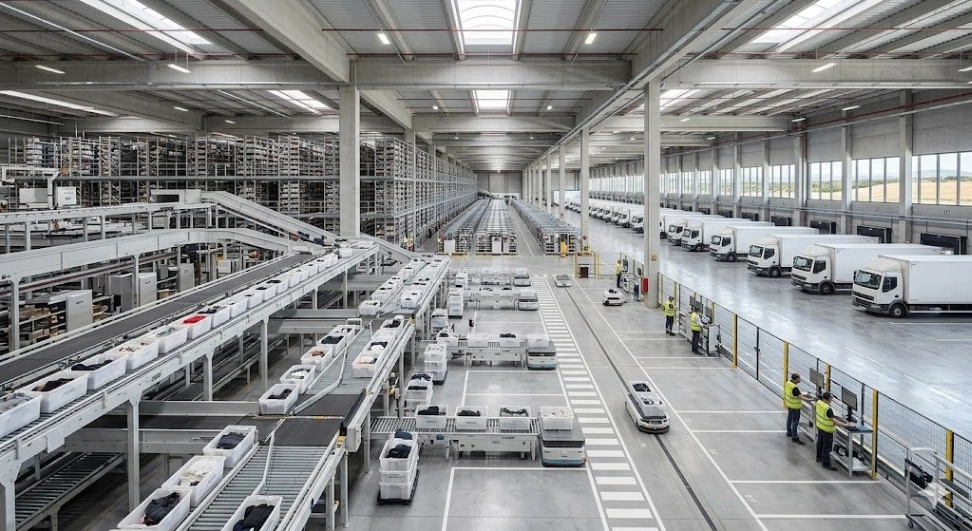
Zara's system operates on rigid lead-time optimization. While competitors release heavy seasonal collections, Zara injects new merchandise into stores twice a week.
The global numbers are simply staggering: Inditex (Zara's parent company) now turns over nearly 36 billion euros a year, producing over one and a half billion clothing items. The machines operate on the most extreme Just-In-Time system. Most critical factories remain geographically close (in Spain, Portugal, and Morocco) to shorten transport times. Advanced RFID technology allows them to track every single shirt from production to the sales floor.
While an average luxury brand has to cut prices and have wild end-of-season sales to get rid of excess inventory, Zara sells about 85% of its merchandise at full price. Its profit margins remain astronomical not because the shirt is expensive, but thanks to operational efficiency. While competitors choke on storage costs in dead warehouses, Zara's money flows directly from the register back to the production floor. This is an art of operational finance that makes competitors look like amateurs.
The End of the Cutting Era: The Next Evolution
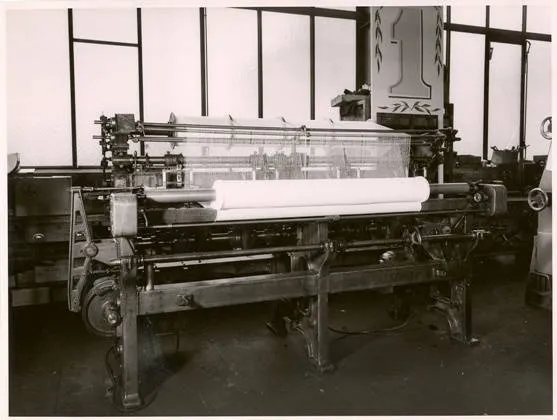
Ortega and Zara have done the impossible and solved the logistics and time problem of the fashion industry. They took the old supply chain and hit the fast-forward button. But even the fastest machine in the world still relies on centuries-old mechanical practice: unfolding huge rolls of fabric, cutting them into shapes, and sewing them together. This process, however fast, inherently generates immense waste of raw materials and surplus. The speed has taken an ecological and operational toll that is beginning to weigh on the world.
The next evolution of the industry will no longer be about moving cut fabrics faster, but about completely eliminating the cutting stage. The future, which is already here and knocking on the industry's doors right now, is based on smart weaving technology that produces the garment directly from the thread to the desired cut. No cutting, no unnecessary scraps falling on the sewing room floor, and no wasting a millimeter of raw material. Whoever cracks this transition – from mass production based on cutting to smart production that creates "Zero Waste" three-dimensional structures directly from fiber – will be the one to write the next chapter in the book that the tailor from Spain started.
Next time you enter a store and feel the urge to buy an item "before it runs out," remember that this is a symphony of data and psychology working in perfect harmony. But also know that the real revolution that will change the garment in your hand is just around the corner.