
The Japanese man who understood that whoever controls the small details – holds the entire fashion industry by the throat
Think about it for a moment: you invest five thousand dollars in a crazy luxury coat. A super brand, the finest leather available, a design that makes everyone turn on the street. And then, in one moment of foolish technical failure – the zipper gets stuck. Or worse, it tears. That's it, the whole coat is ruined. The business stops, the reputation of the world's largest fashion brand evaporates in a split second, and all because a "ten-cent" component decided to go on strike just as you were going out on a date or to a business meeting...
He who controls the smallest and most fragile detail in the chain – is the one who holds the switch of the entire industry. Sound familiar?
Facing a wall of giants:
Tadao Yoshida's choice
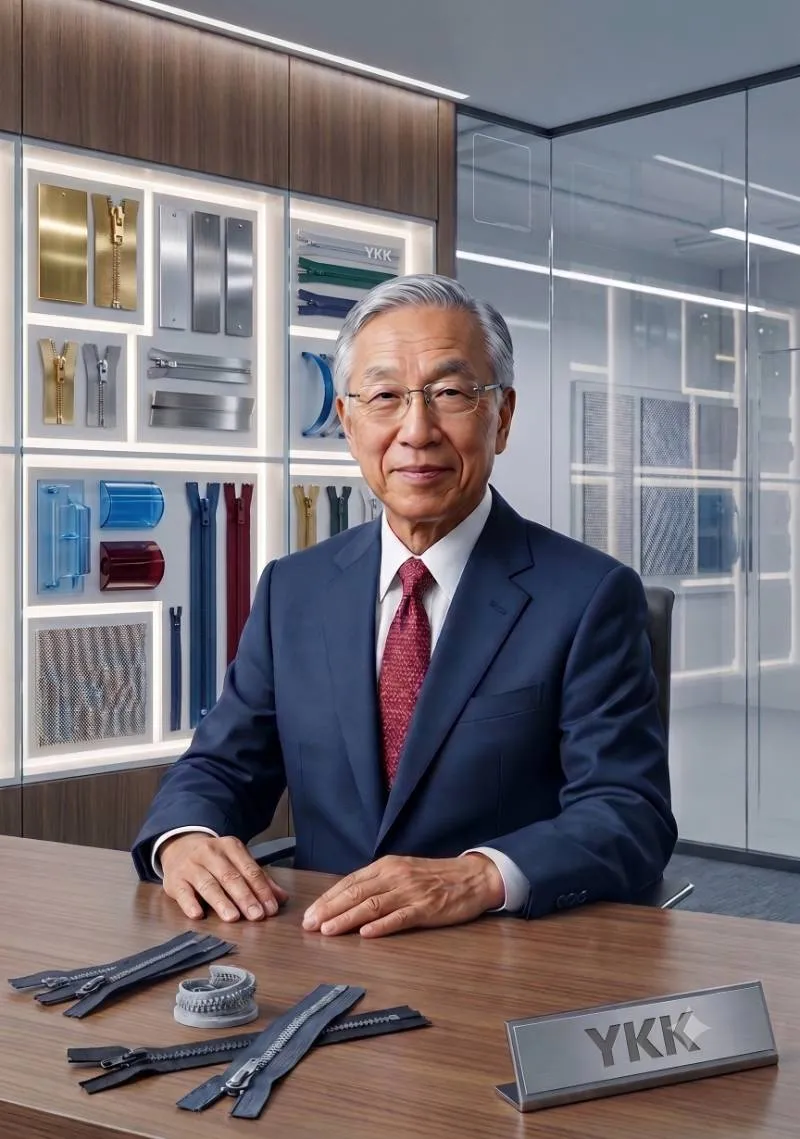
Our story begins in Japan in 1934. Tadao Yoshida was not a rich man; he was mostly a desperate man with a vision. He tried to enter the world of zippers, but the market was hermetically sealed. American giants, like the Talon company, controlled every corner. They had huge factories, endless budgets, money flowing like water, and historical ties with every possible fashion house.
Yoshida quickly realized that if he tried to play by their rules – to be another trader buying cheap parts and trying to assemble something that works – he would end up bankrupt within a week. So he chose the most extreme path, a strategy that today is called "Complete Vertical Integration".
He decided not to rely on any external supplier. He started producing everything in-house. And when we say everything, we mean everything: YKK not only produced the metal teeth, they cast the brass themselves, formulated the polyester, spun and dyed the fabric threads of the tape, designed their own production machines, and even produced the cardboard boxes in which the zippers were packed! The standards of precision bordered on madness, all to ensure that this little thing simply never broke.
"The Virtuous Cycle": The Philosophy That Beat Marketing
Yoshida's choice to focus on obsessive quality control stemmed from a business philosophy he formulated, which he called "The Cycle of Goodness." The principle was simple: no one can thrive unless they provide genuine benefit to others.
In scientific marketing, we talk about creating value independent of the complementary product. While competitors in America and Europe were spending millions on logos and branding, Yoshida solved the equation of reliability: The end customer doesn't remember the designer's name when the coat is ruined, they are simply angry at the brand. This is a strategy of preventing chain failures. By making the zipper the only "unbreakable" component in the market, Yoshida turned his product from a potential malfunction into an insurance certificate for fashion brands. They made him a monopoly out of their existential need to survive.
The Patent That Saved Us from Embarrassment (Champion Materials Engineering)
YKK's superiority relies on precise materials engineering. The micron-level accuracy in the zipper teeth creates minimal friction with minimal wear. But the true genius was expressed in solving everyday problems that no one knew how to fix.
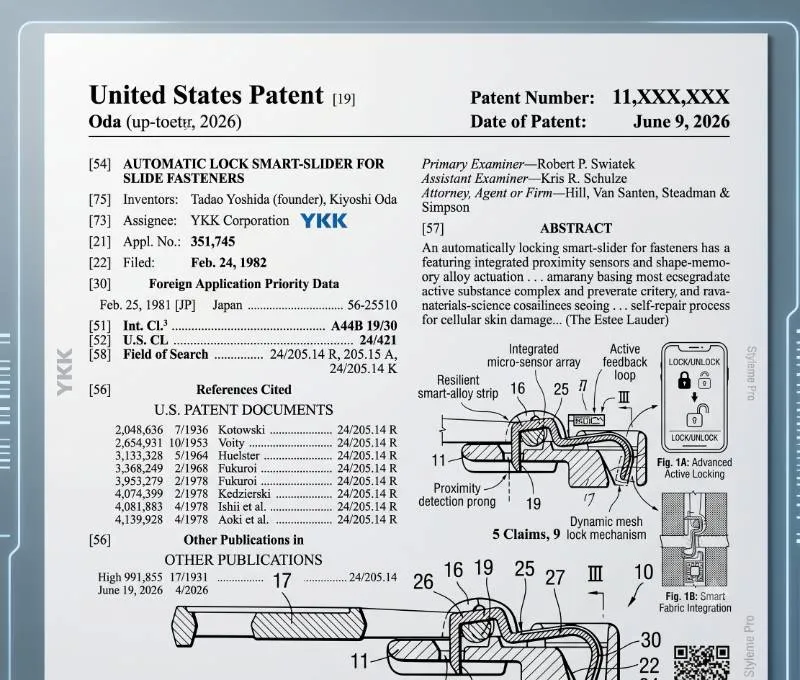
A Peek into the Patent Lab: Take, for example, the company's famous 1983 patent (Number 4,422,220 developed by Kiyoshi Ohta for Yoshida Kogyo K.K). This patent describes the "Automatic Lock Slider." Remember that in the past, pants zippers used to tend to open on their own, creating very embarrassing social situations? YKK developed a mechanism based on a spring (Resilient strip) in the shape of the letter "E" inside the zipper body. When the pull tab is flat downwards, a small tooth automatically locks between the zipper teeth, preventing it from moving even a millimeter. As soon as you lift the tab, the spring rises and releases the lock. A miniature, ingenious, and aesthetic mechanical mechanism, which is today found in almost every pair of jeans in the world without us even thinking about it.
The Economics of the Zipper: From Zero to a Hundred Billion
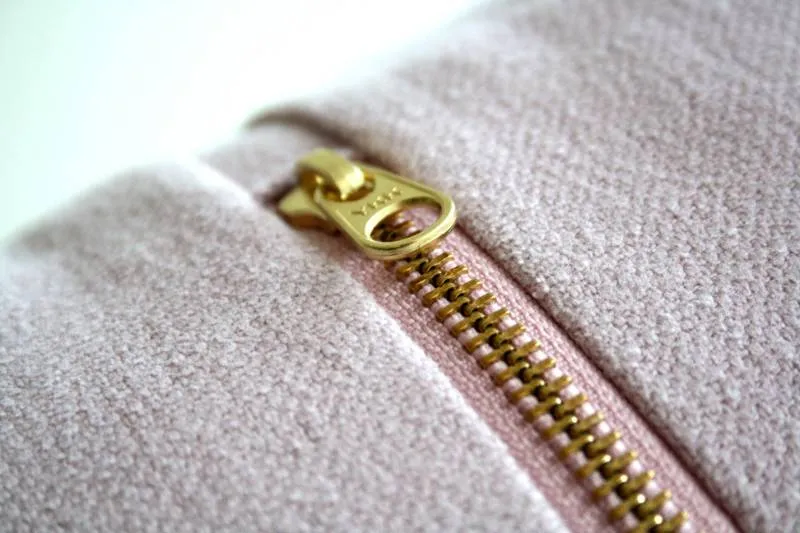
Economically, this is a masterful lesson in efficiency. YKK has transitioned from a model of "economies of scale" to "economies of quality." While the direct cost of self-manufacturing was initially higher, the dramatic reduction in return rates made the brand the default choice. When a company produces over 7 billion zippers annually (enough to circle the Earth more than 50 times!), the marginal cost of each unit plummets to almost zero.
YKK is a company that doesn't need to sell dreams or a puffed-up logo. It simply dominates. YKK Group achieved record sales of approximately $6.6 billion, with an imaginary control of nearly 45% of the global zipper market. While luxury brands pour hundreds of millions into seasonal campaigns and chase fleeting trends, Yoshida's successors sit on a tiny mechanism that brings in enormous profits year after year. They don't chase trends – they are the engine that connects them.
The Bottom Line
Japan, instead of conquering the world with tanks and military might, conquered it with a small metal mechanism. While the world was preoccupied with fashion dramas and colossal budgets, Tadao Yoshida seized the zipper of history and held on tight.
He who controls the zipper controls the coat. And he who controls all the coats controls all our pockets. Precise, silent, and unbeatable.
Don't believe me? Look at the zipper on your [high-quality...] clothing items, look at the small metal pull. Almost with absolute certainty, three small letters are engraved on it: YKK.